
🌸 A garden-to-table guide for gardeners, home chefs & herbal enthusiasts
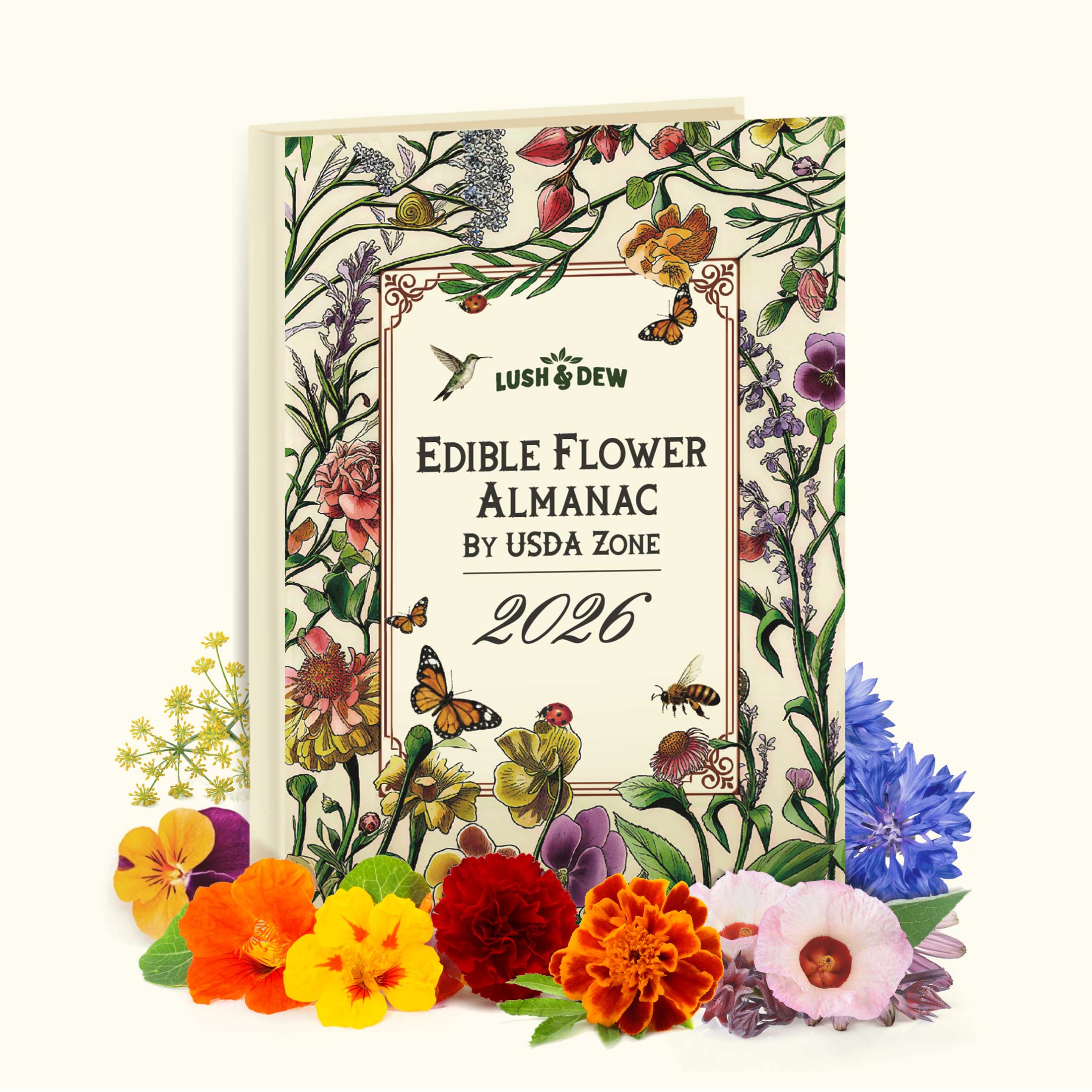
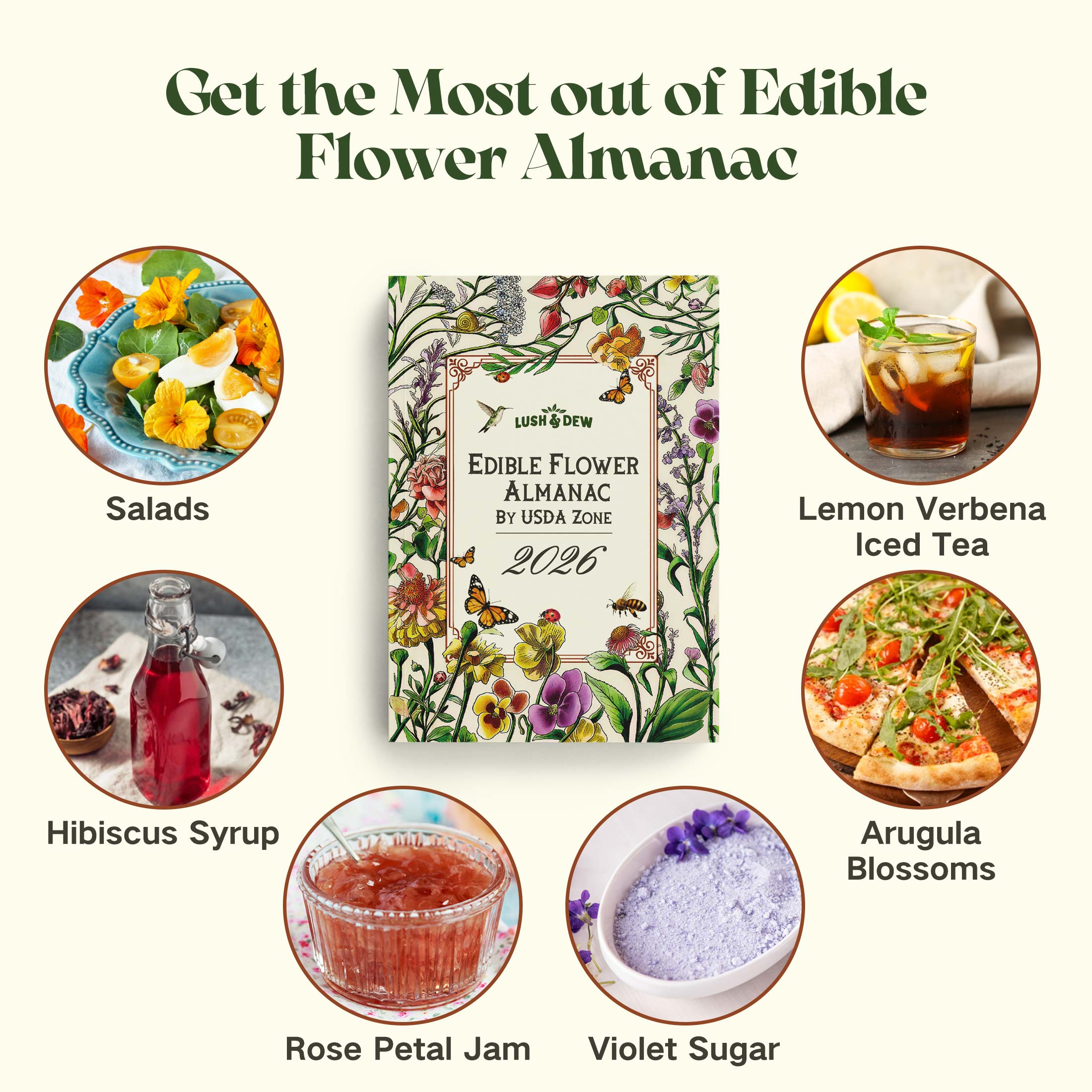
Designed to accompany the LUSH&DEW Edible Flower Seed Bank, this almanac is a creative and practical guide for gardeners, home chefs and floral enthusiasts. With zone-adaptability from USDA 3 through 11, it blends culinary knowledge with modern gardening guidance — offering clear monthly planting tips, harvest notes, preservation techniques, and seasonal cooking inspiration to carry you through the year.
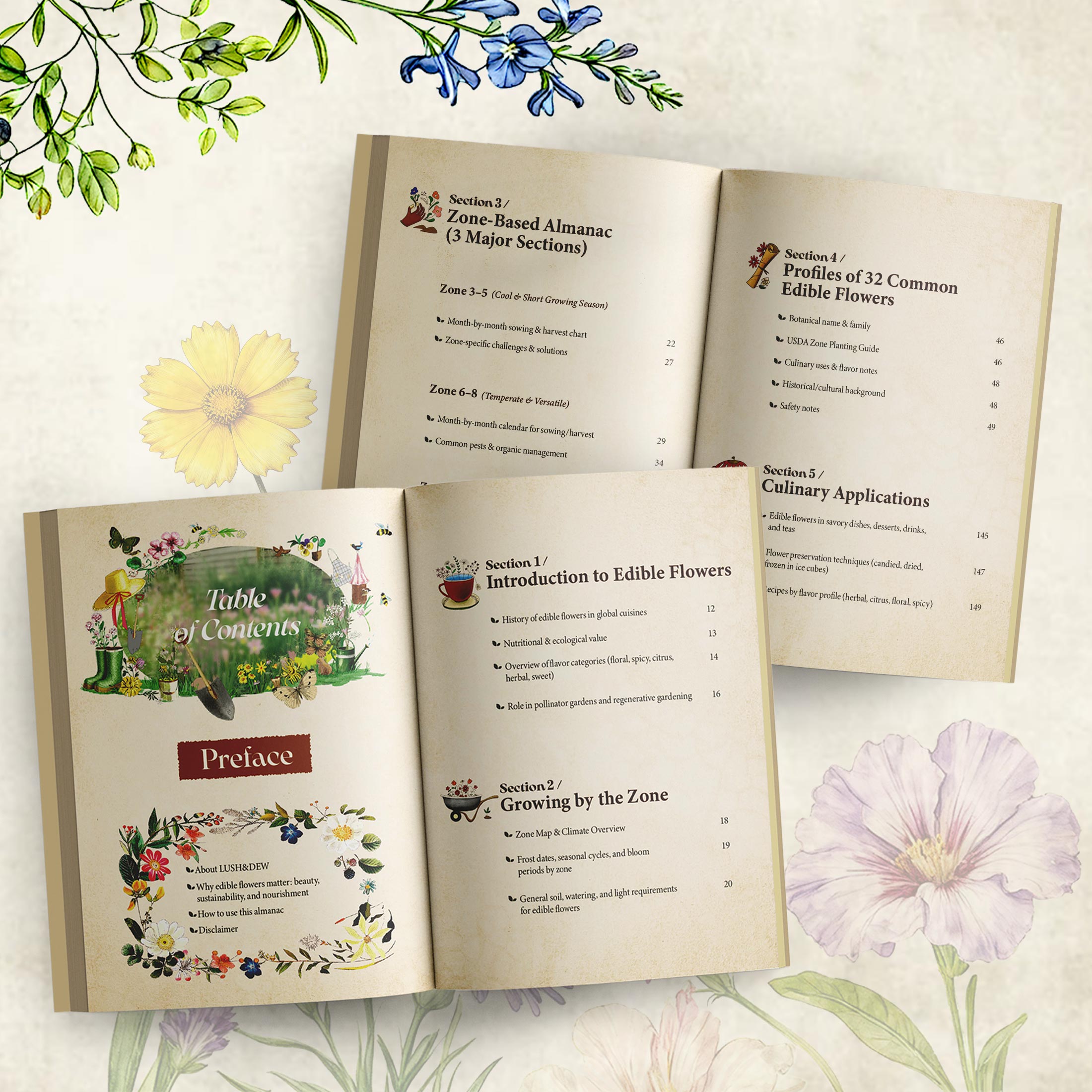
What’s Inside the Edible Flower Almanac 📖
1. Introduction to Edible Flowers
A welcoming overview of the culinary and cultural importance of edible blooms.
This section explores:
A global history of edible flowers across ancient cuisines
Nutritional and ecological value of cooking with flowers
The five major flavor types
Their roles in pollinator gardens, biodiversity, and regenerative gardening
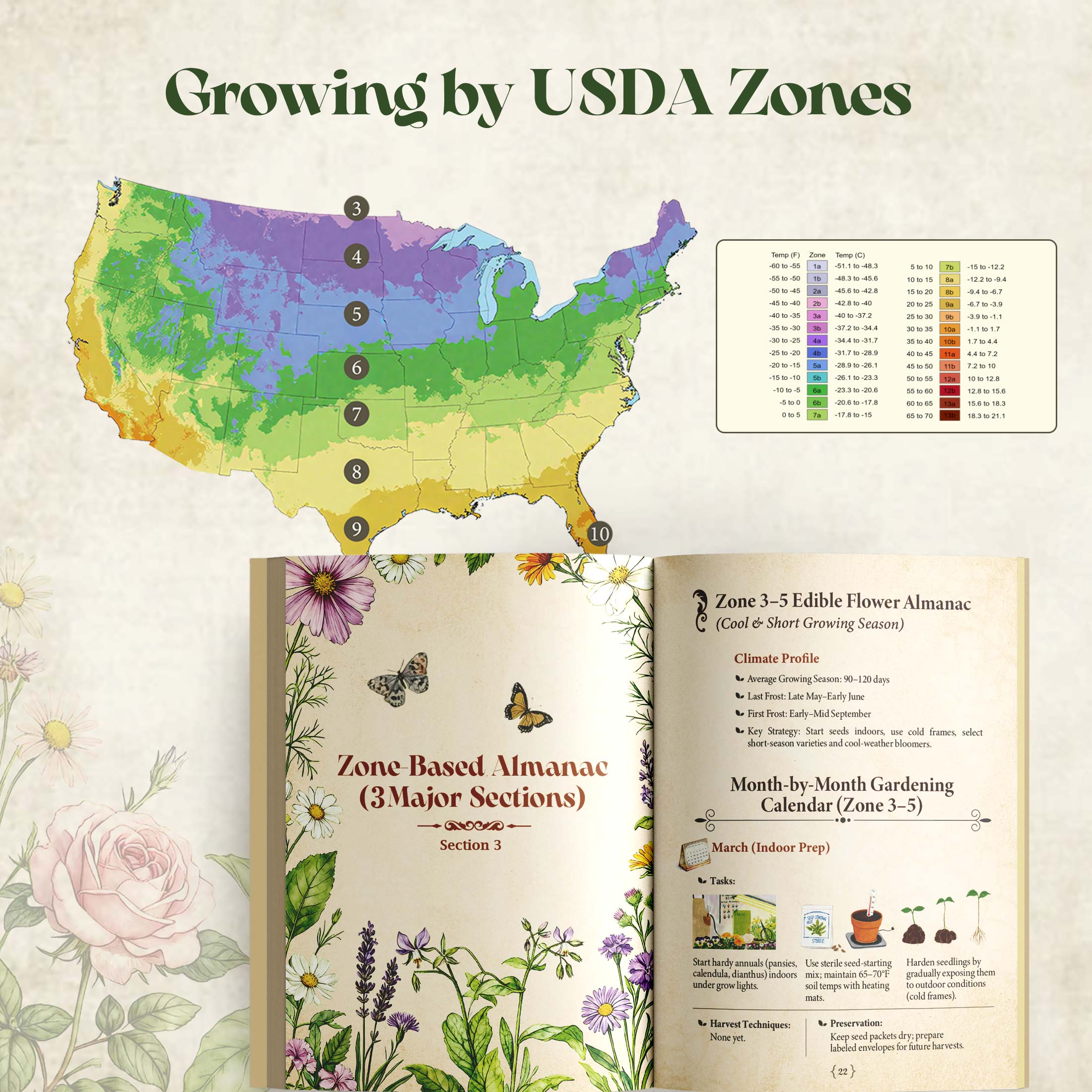
2. Growing by USDA Zones
A clear, zone-based introduction to how climate shapes edible flower cultivation.
This part includes:
Climate snapshots for USDA Zones 3–11
Temperature patterns, frost timing & bloom periods
General soil, watering, and light requirements for edible flowers
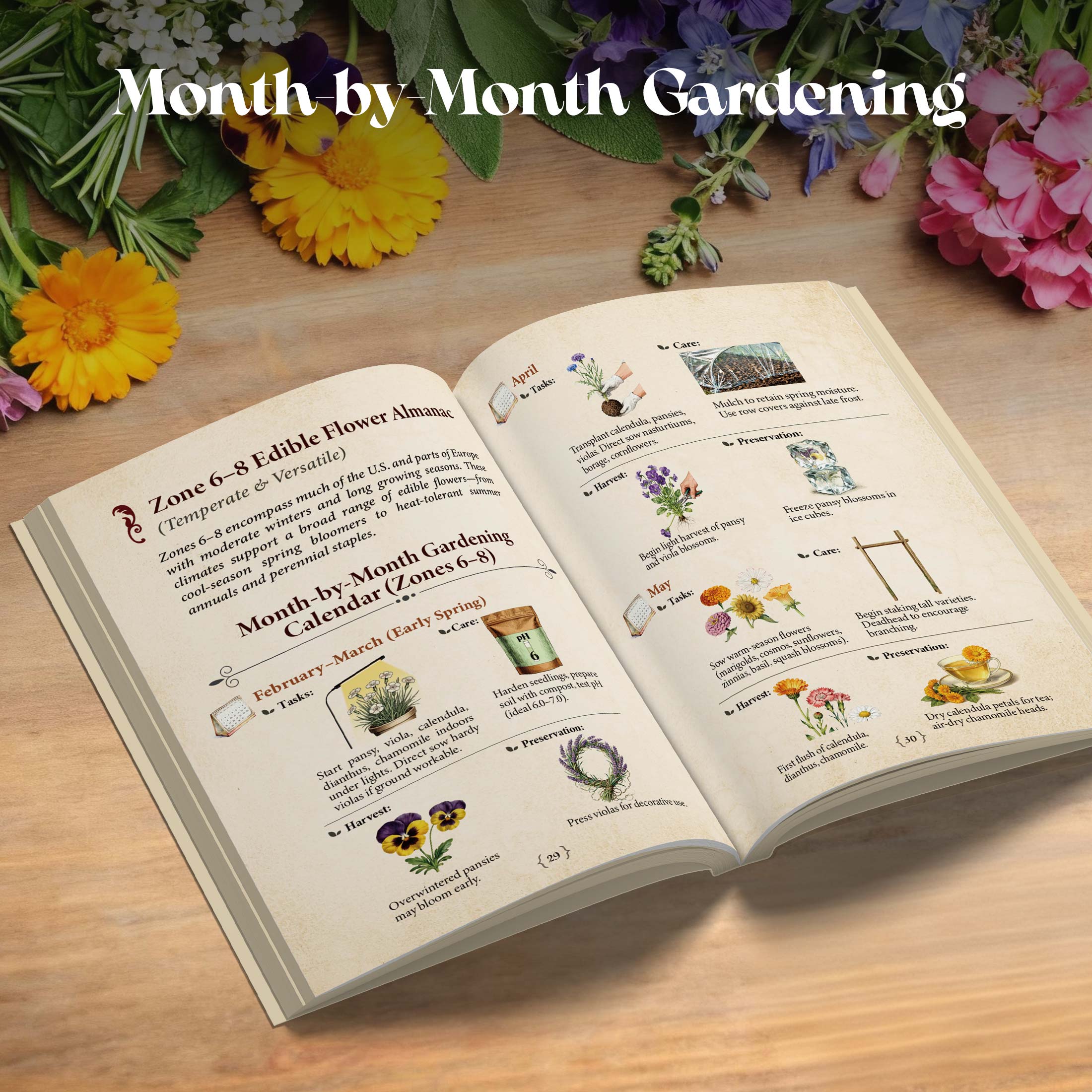
3. Zone-Based Monthly Planting Almanac
A month-by-month guide designed to match your USDA Zone and growing season.
USDA Zones are divided into three region groups:
🌿Zones 3–5 (Cool & Short Season)
🌼Zones 6–8 (Temperate & Versatile)
🌺Zones 9–11 (Warm & Tropical)
This part shows:
What edible flowers to sow monthly for each zone group
What blooms you can harvest throughout the season
How to use fresh petals in the kitchen—teas, garnishes, syrups, salads, baked goods & more
Simple preservation tips for long-term use (drying, freezing, candying)
Zone-specific challenges (heat, frost, pests) & easy solution
4. Profiles of 32 Common Edible Flowers
A complete reference to the 32 varieties included in the LUSH&DEW Edible Flower Seed Bank.
Each profile features:
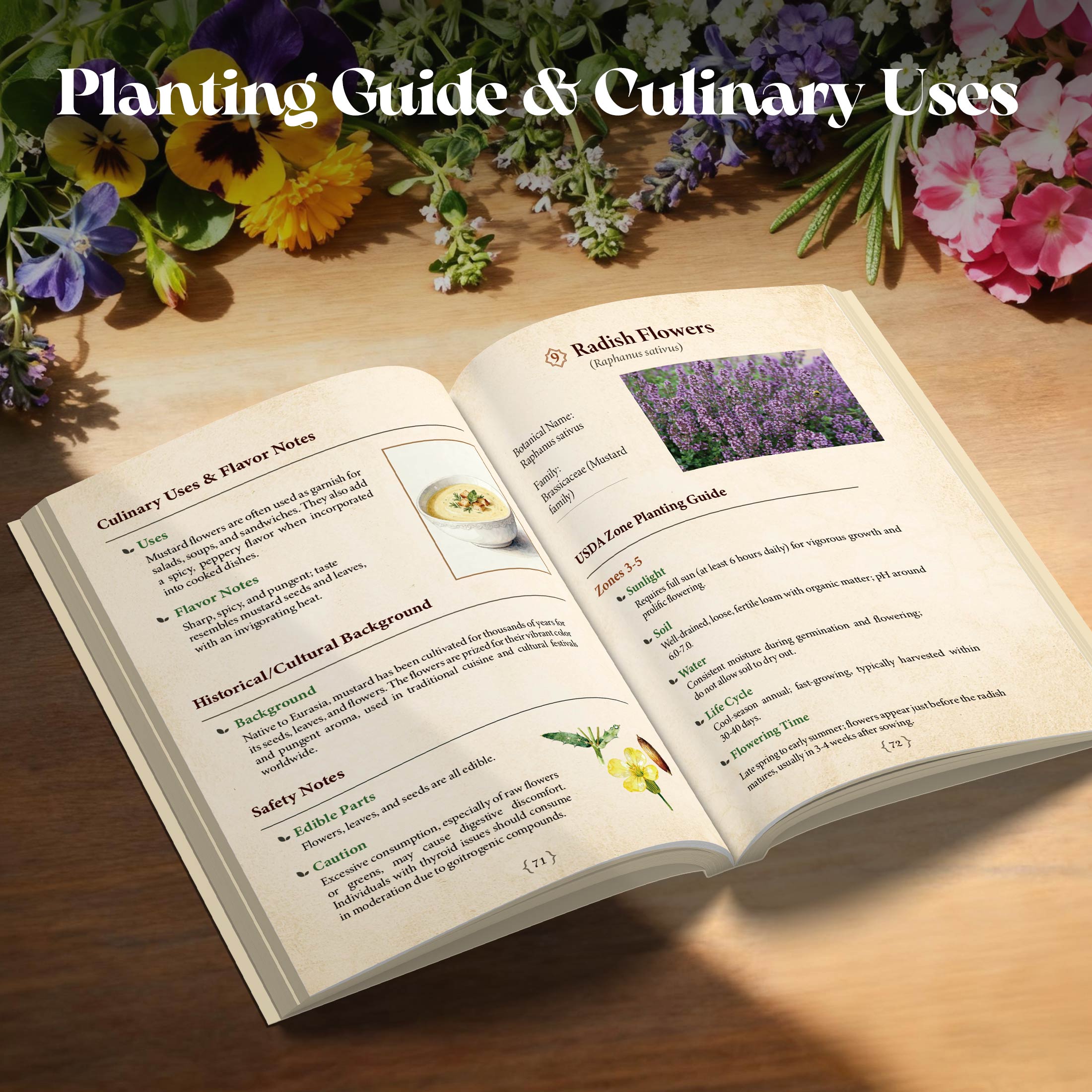
Zone-specific growing notes (about sunlight, soil, water, life cycle, flowering time)
Culinary uses & flavor characteristics
Historical and cultural background
Safety guidance for home cooks
Best preservation techniques for each bloom
5. Culinary Applications
A chef-inspired introduction to cooking with edible flowers:
Methods for preserving edible blooms
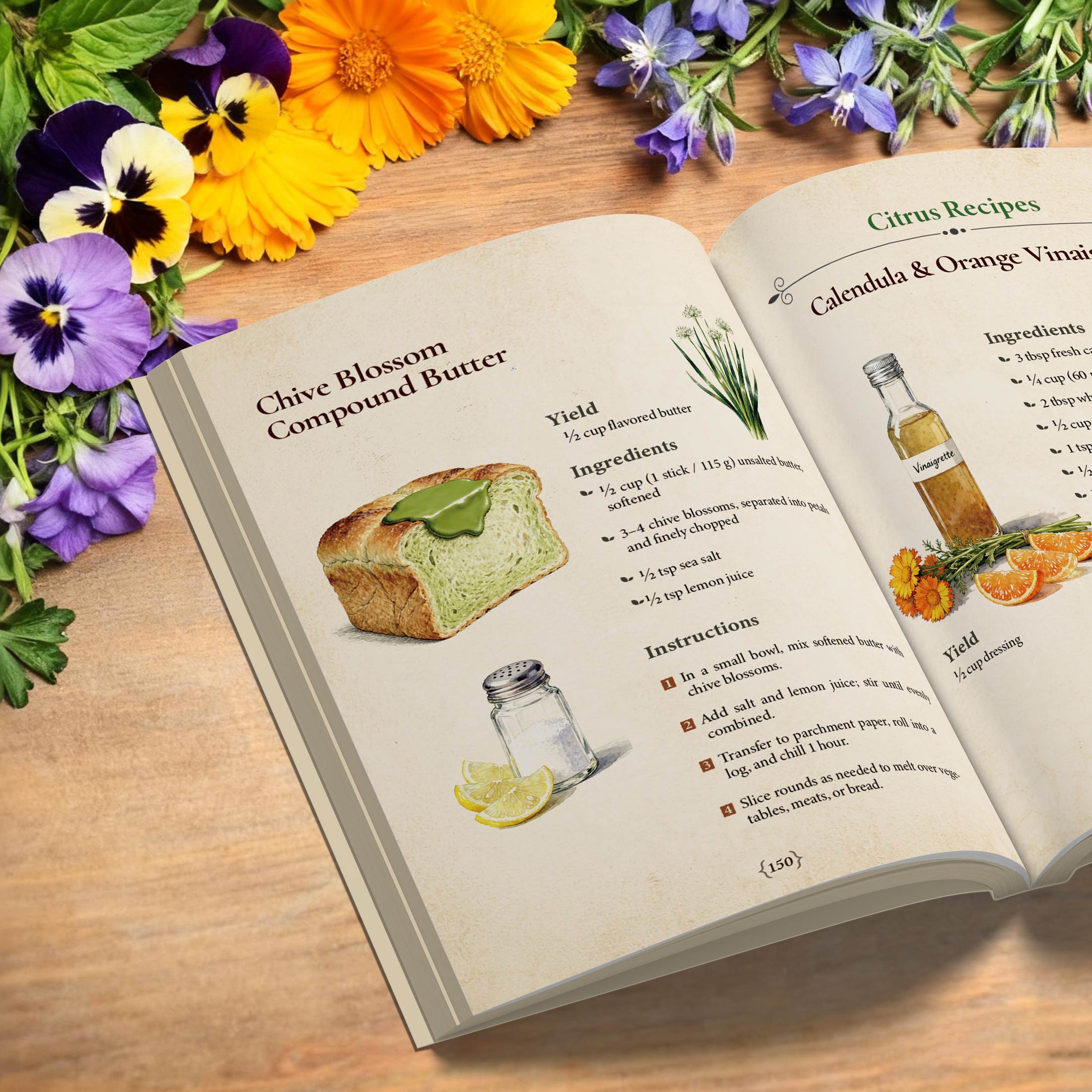
Recipes organized by flavor profile:
Herbal, Citrus & Bright, Floral & Sweet, Spicy & PepperySimple syrups, infused oils, dressings, teas, desserts & more
6. Herbal Healing & Nutritional Uses
A concise overview of the wellness benefits of edible flowers.
You’ll explore:
Nutritional components found in common edible blooms
Traditional culinary & therapeutic uses
Guiding principles for safe consumption
7. Garden Design Inspiration
Creative layout ideas for:
Small-space container gardens
Pollinator-friendly edible flower beds
Ancestral-inspired garden patterns designed for beauty & harvest
8. Preservation & Storage Guide
A detailed section for gardeners who want to enjoy edible flowers year-round.
This section covers:
Drying techniques for petals & whole blooms
Freezing methods for culinary use
Storage tips based on flower type & intended purpose
- How to retain color, aroma & flavor through the seasons
🌼 Why Pair with the Edible Flower Seed Bank?
The 2026 Edible Flower Almanac was designed to work hand-in-hand with the 32-variety edible flower seed collection. Together, they provide both the seeds and the knowledge—so you can sow with confidence, harvest with intention, and bring vibrant blooms directly from garden to kitchen.
🌿 A Gift That Delights
Whether you’re starting a new edible-flower bed or expanding your garden-to-table creativity, this almanac is both a practical guide and an inspiring seasonal companion. Pair it with our seed bank for a gift that celebrates sustainability, flavor, and the joy of growing beautiful things.